

Bereichsnavigation
The Accordion
Spotlight exhibition
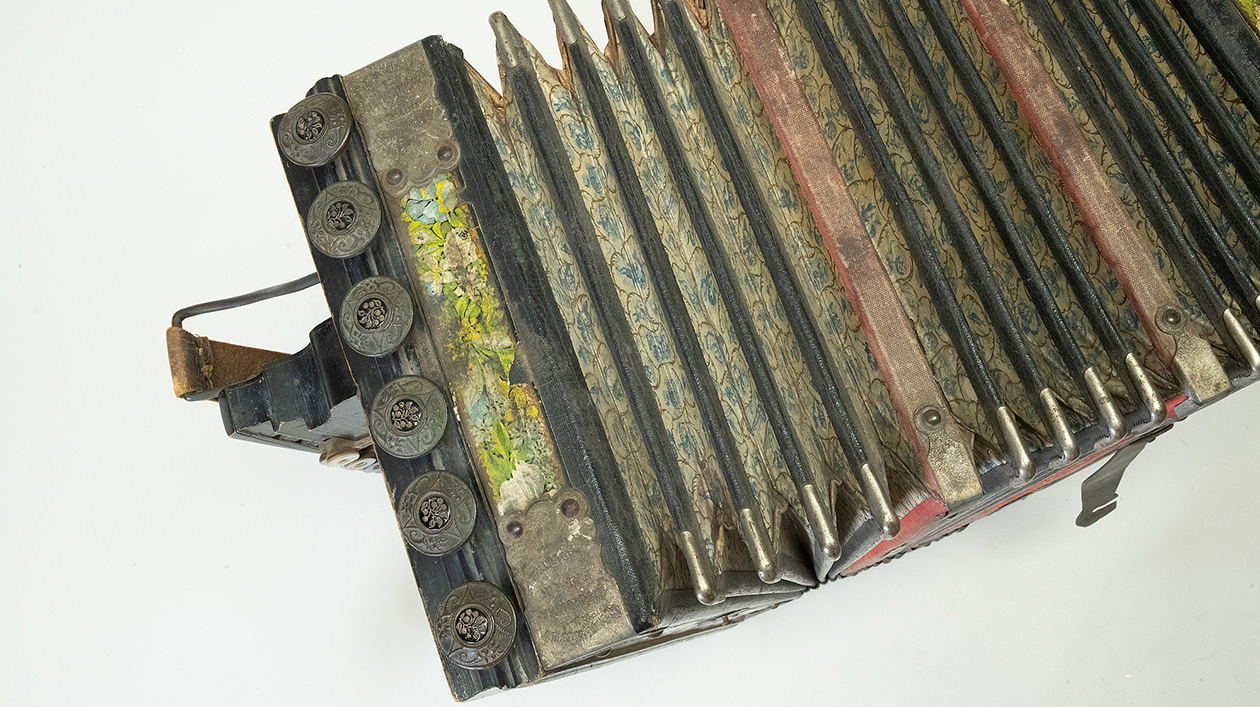
The accordion is a familiar feature in many musical genres: in folk and popular music, in jazz and dance music, as well as in contemporary music. Yann Tiersen’s soundtrack to the film *Amélie* made its sound familiar to an audience of millions.
The notes are produced by freely vibrating metal reeds. The bellows, which generate the airflow, allow the instrument to ‘breathe’, giving the music its unique character. The accordion was developed around 1820, simultaneously in Germany and Austria. There are now numerous variants. What they all have in common is that individual notes are played using buttons or keys with the right hand. The buttons on the left hand produce entire chords.
Mass production began in the mid-19th century. Larger workshops assembled the individual parts, which were often made at home by casual labourers. Dealers purchased the finished instruments and shipped them all over the world. As they are robust and easy to transport, they were soon being played in concert halls and dance halls, at folk festivals and on numerous other occasions.
To the objects
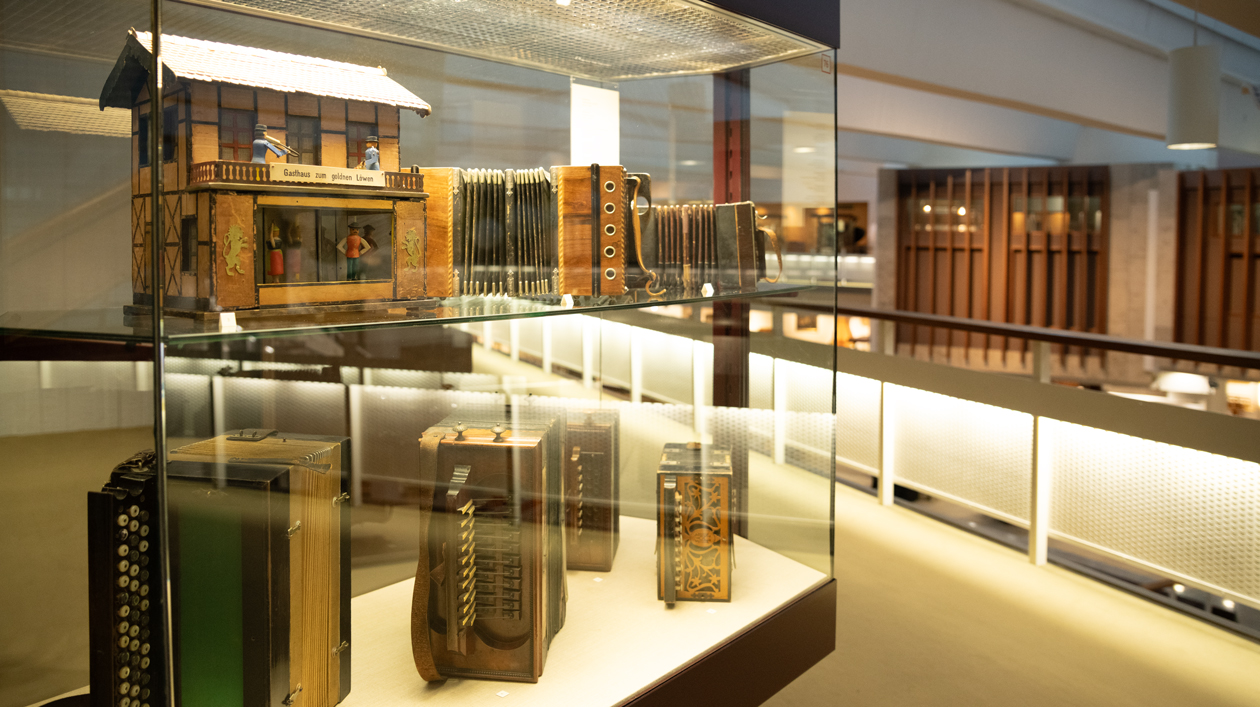
Using a selection of accordions from the collection of the Musical Instrument Museum, we provide an insight into the history of the instrument.
The German concertina by C.F. Uhlig (ca. 1845), cat. no. 5171, is one of the earliest hand-pulled instruments in the collection. It symbolises the beginning of this new genre, which combined freely vibrating metal reeds with a hand-operated bellows or air stream to produce sound. As the buttons on both sides "only" produce individual tones and these vary between the opening and closing of the bellows (alternating tones), the concertina is not yet an accordion, but a forerunner.
The German hand harmonica, cat. no. 4834 from Meinel & Herold (ca. 1870) from Klingenthal symbolises the beginning of the spread and production of accordions in large numbers. Klingenthal was one of the most important towns in the so-called Musikwinkel, a small region between Bohemia, Thuringia and northern Bavaria, and an economically important location for the manufacture of musical instruments. In 1893, the family business Meinel & Herold was transformed into a company specialising solely in harmonica and accordion instruments. The accordion Cat. No. 6131, which was manufactured between 1930 and 1950, is proof of the company's success. The long period of time indicates the enormous popularity and distribution, as models were produced unchanged for over 20 years.
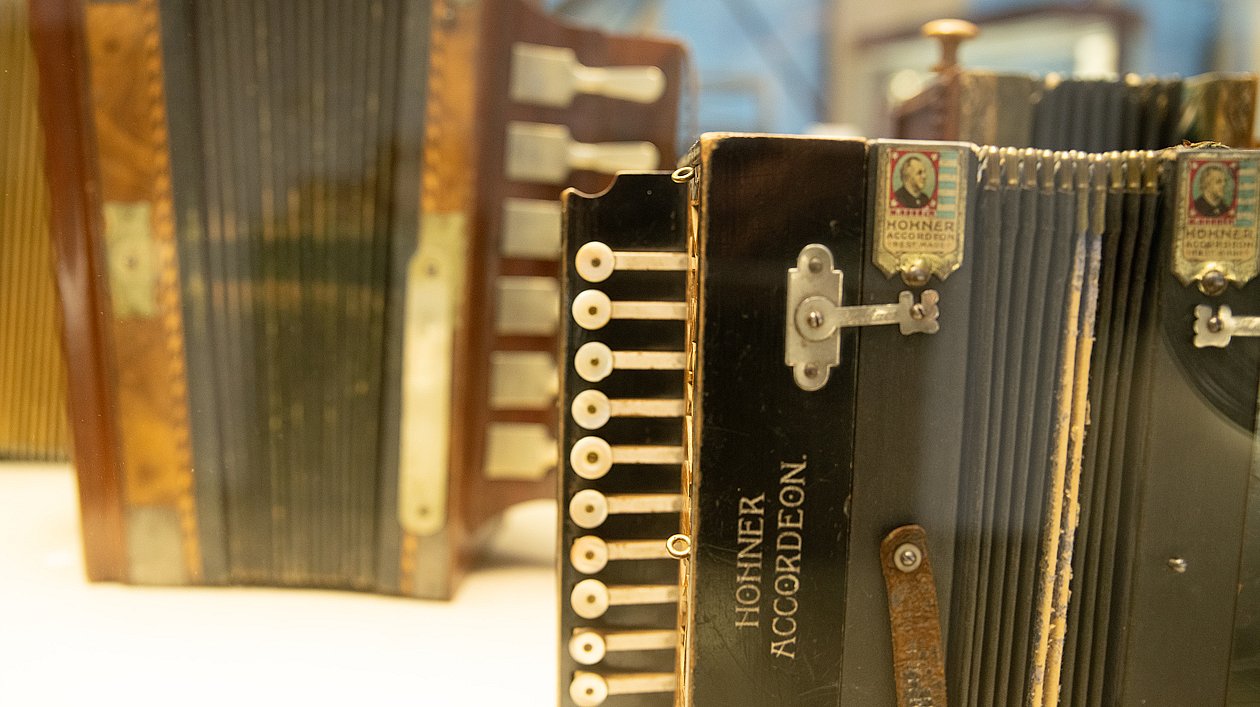
Today, Germany is dominated by the company Hohner in Trossingen dominates the German accordion market. The model "Tango", cat. no. 5596 from 1914, is an example of this, as the name indicates that the accordion was already widespread in numerous musical niches at that time. However, the accordion has nothing to do with the tango. There, a bandoneon is traditionally played, which - unlike accordions - does not have a mechanically preset chord system, has alternating tones and is played exclusively using buttons on both sides.
Another example of the different spread of the accordion from the bandoneon is the accordion by Alfred Arnold In Argentina, the name Alfred Arnold is inextricably linked with the bandoneon(Doble A). But Alfred Arnold did not only build bandoneons in his company. He was just as successful making accordions for the European market.
Together with other models shown in the exhibition, these instruments characterised the sound of numerous European musical styles and genres, ranging from modern to folkloristic music. The accordion combines worlds of expressive styles and possibilities, making it a true musical universalist.
Impressions of the exhibition

Contact us
Events
Accordion Controversies – Panel Discussion
04.09.2026, Curt-Sachs-Saal, 6 p.m. (in German)
with Prof. Dr Conny Restle (UdK), Dr Yongfei Du (Ethnological Museum) and Dr Sydney Hutchinson (SIM). Moderator: Dr Maurice Mengel (Ethnological Museum).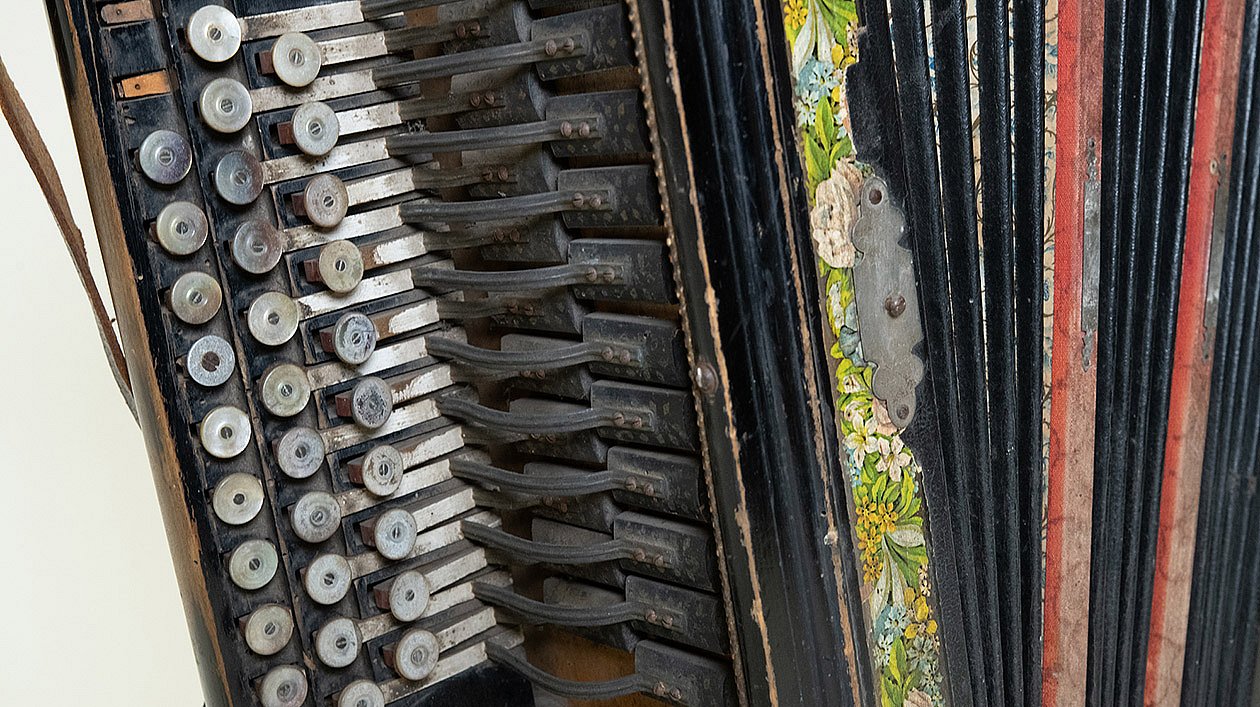
On 1,000 keys – Music school concert celebrating the Instrument of the Year
07.11.2026, Curt-Sachs-Saal, 2.30 p.m.
The Leo Kestenberg Music School’s accordion orchestra plays music ranging from Bach to the Beatles.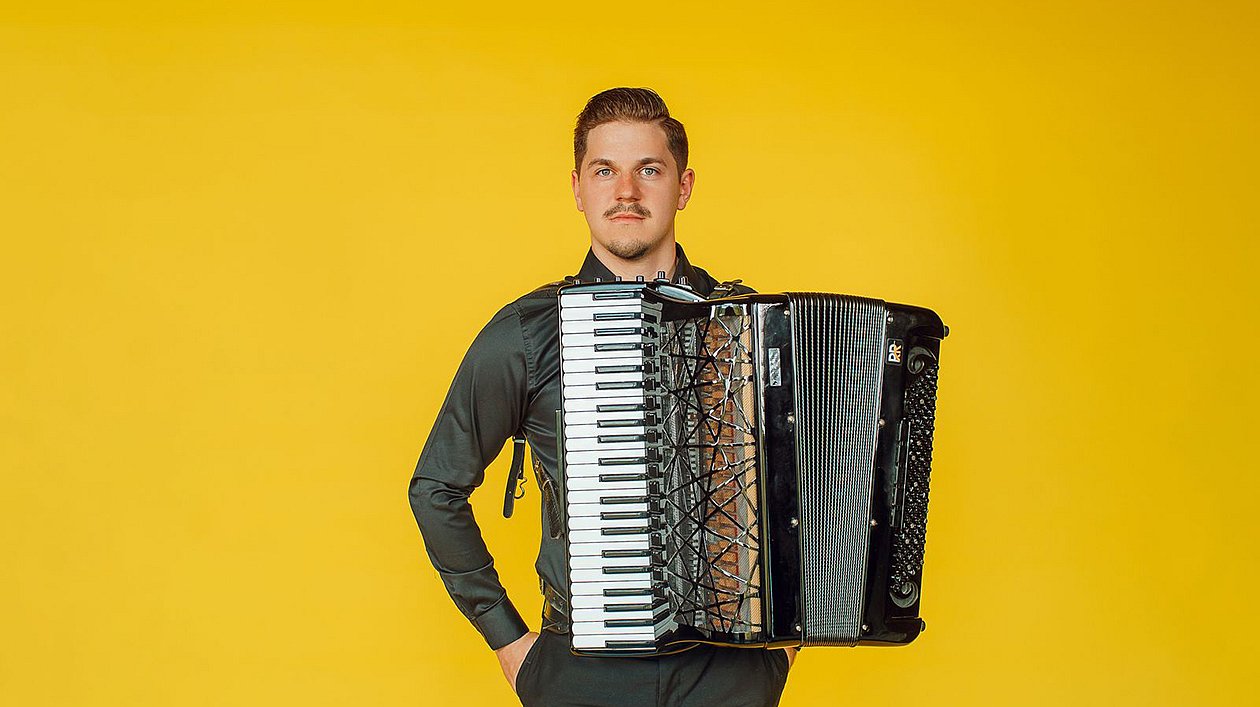
All'italiana – Accordions from Castelfidardo
19.11.2026, Curt-Sachs-Saal, 7 p.m.
A musical and literary journey with Radu Ratoi (accordion) and Bruno Franceschini (text and reading).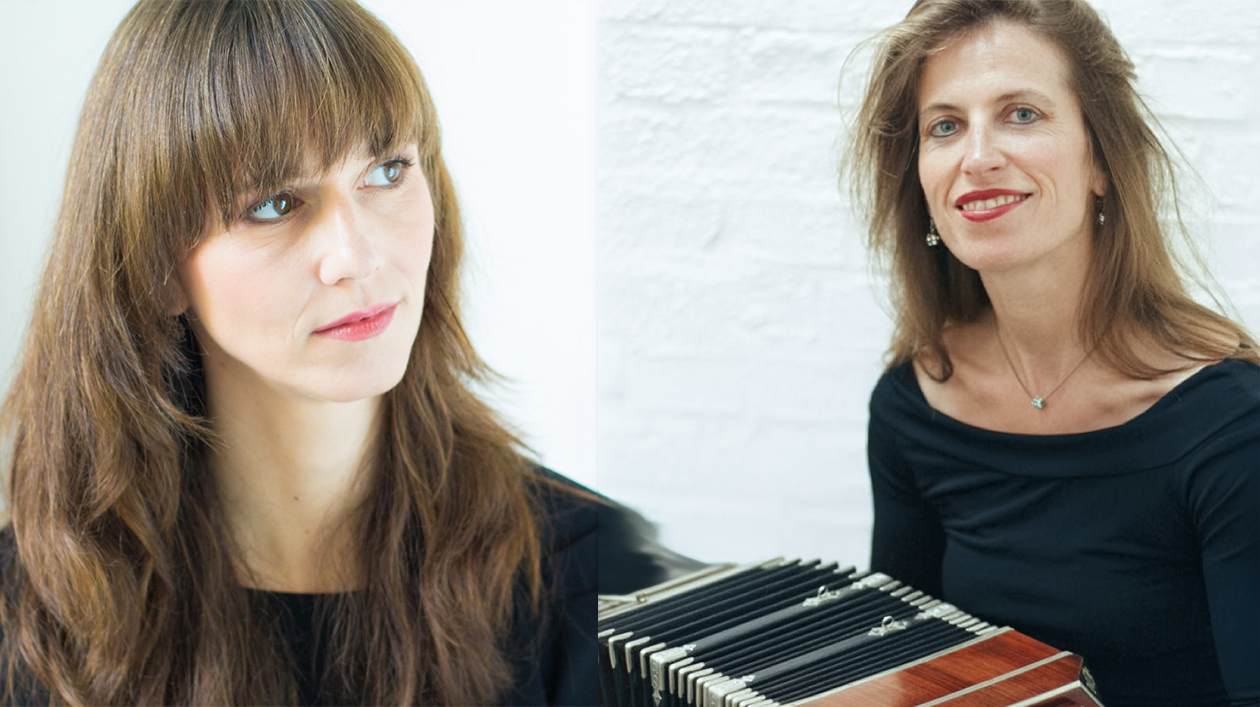
Beloved, Soulmate – The Bandoneon in World Literature
17.12.2026, Curt-Sachs-Saal, 7 p.m.
Featuring Helena Rüegg (bandoneon) and Aurélie Maurin (curator and reader).