

Bereichsnavigation
Berlin reception centres, 1900 to 1945
Centres of the phonographic industry in times of global crisis
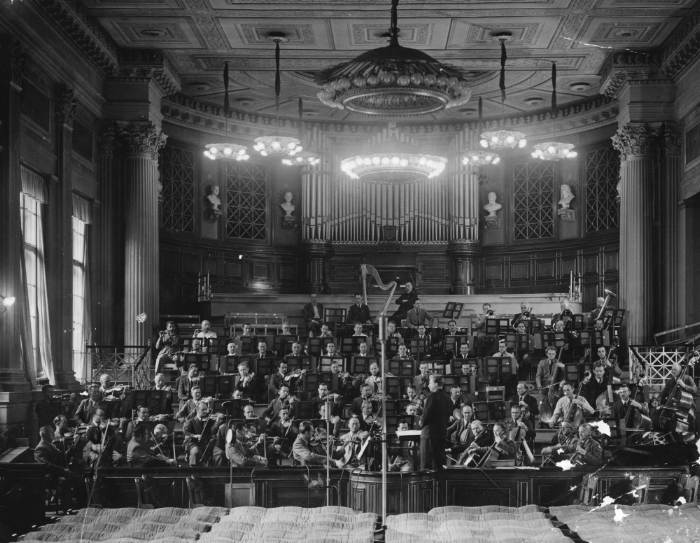
Among the approximately 16,000 historical sound recordings held by the SIM are around 10,000 productions from Berlin recording studios dating from the first half of the 20th century – some of which have since been destroyed, whilst others still exist today. This was a time when Berlin was the main centre of the German phonographic industry, following the establishment of Thomas Alva Edison’s (phonograph) and Emil Berliner’s (gramophone) companies at the turn of the century, which led to the emergence of around a dozen firms dedicated to the production of acoustic sound recordings of all musical styles and genres for a global market.
By drawing on objects from the SIM’s collection and focusing on the architectural spaces in which people recorded and produced music, it is possible to convey the city’s significance in terms of local cultural and economic history and to remind the wider public of this. The project ‘Berlin Recording Studios 1900 to 1945 – Sites of the Phonographic Industry in Times of Global Crises’ aims to provide an overview and, in specific cases, to investigate the premises in which sound recordings were made – for over 40 years using purely mechanical methods with a funnel, and from 1926 onwards with electrical amplification and a microphone – and what these venues were like.
The project aims to identify and digitise exemplary productions by various companies from around 20 recording studios over the period from 1900 to 1945, and to present them alongside the available information – data, texts and images from the trade press, from records held at the State Archives, the Secret State Archives of the Prussian Cultural Heritage Foundation and the German Museum of Technology –. The extent to which the surviving phonograms serve as acoustic snapshots of the spaces in which they were recorded will need to be clarified, as will the question of whether interactions between the space and the recorded performance can be identified. Ultimately, a finding that would suggest the specific historical space was merely a facility – one that is no longer discernible in the finished audio product – is also of significance; for this would allow far-reaching conclusions to be drawn, for example, regarding the prevailing recording conditions, but also regarding the performers’ willingness to adapt to the new medium and, consequently, the development of a specific aesthetic of recording and performance.